Need to Know Before You Go - First Time RV Campers

Need to Know Before You Go - First Time RV Campers

10 Essential Items for First-Time RV Campers

Welcome to the RV lifestyle! Traveling in a recreational vehicle offers incredible freedom and comfort. While RVs come equipped with many home comforts, there are a few essential accessories and tools you need to manage the utilities and set up your site smoothly.

To ensure your first RV trip is smooth sailing (or driving!), here are 10 essential items every first-time RV camper should have on hand.

The RV Essentials Checklist

1. Power Management

  • Surge Protector/Electrical Management System (EMS): This is non-negotiable! Shore power at campgrounds can sometimes be unstable no matter what precautions have been taken by the Camp Host. A good surge protector plugs into the campsite pedestal first and protects your RV's entire electrical system from dangerous power spikes or low voltage.

  • Adapter Pigtails: You may need a 30-amp to 50-amp adapter (or vice versa) depending on your RV and the campsite's pedestal setup.

2. Water Hookups

  • Drinking Water Hose (White): You must use a hose specifically rated for drinking water (it will usually be white or blue). Never use a standard green garden hose for drinking/cooking.

  • Water Pressure Regulator: Campground water pressure can vary wildly. This device connects to the faucet and protects your RV's internal plumbing from being damaged by excessively high pressure. Our campground uses well water, so a regulator is not necessary while you stay with us but it is a wise choice for parks running on city water systems.

3. Sewer Setup

  • Sewer Hose Kit: This includes the heavy-duty flexible hose and the clear elbow/adapter that fits into the campground’s sewer port.

  • Disposable Gloves: Always use disposable gloves when handling the sewer hose.

4. Leveling Blocks & Wheel Chocks

  • Leveling Blocks: Campsites are rarely perfectly level. Leveling blocks (often interlocking plastic pads) go under your tires and/or jacks to keep your RV level, which is necessary for the refrigerator and a good night's sleep.

  • Wheel Chocks: These wedge tightly against the tires and are crucial for securing the RV, especially on a slope.

5. Awning & Outdoor Comfort

  • Camp Chairs & Outdoor Rug: Since your RV is your home base, you need comfortable seating and an outdoor rug (often polypropylene) to define your living space and keep dirt out of the coach.

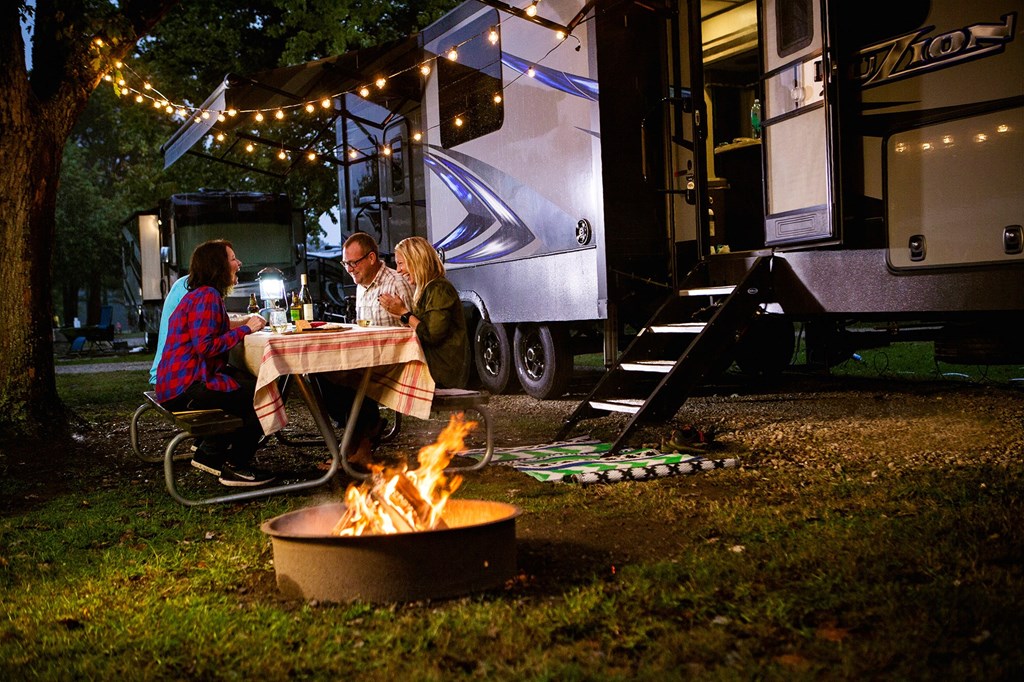
  • Campsite Lighting: String lights or small patio lanterns help create a warm atmosphere under the awning after dark.

6. Basic Tool Kit

  • Basic Tools: Include a screwdriver set, adjustable wrench, duct tape, electrical tape, and zip ties. RVs always need minor adjustments!

  • Multi-Purpose Lubricant (WD-40): Great for slides, steps, and hinges that stick.

7. Internal Cleanup

  • Small Vacuum/Dust Buster: RVs can get surprisingly dusty. A compact handheld vacuum is essential for quick cleanups.

  • RV-Safe Toilet Paper & Toilet Treatment: RV toilets require special single-ply toilet paper designed to quickly dissolve to prevent clogs in your black tank. Black tank water treatment chemicals (like Camco TST) are an essential step in controlling odors and facilitating the breakdown of waste and tissue. These treatments are typically sold in the form of a drop-in pod or in small individual bottles, which means no measuring on your part!

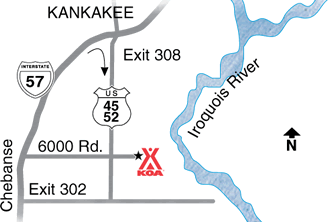
Headache-free directions to our campground that the GPS usually misses.

8. Navigation & Guidance

  • RV GPS or App: Standard car GPS doesn't know about low bridges, weight limits, or steep grades. Use an RV-specific navigation app (like RVLife or Garmin RV) that takes your vehicle's height and weight into account. Before you hit the road, check your KOA's website to look for RV-friendly driving directions (found at the very bottom of the home screen) to get you to your campsite with fewer headaches. 

  • Checklist: Use a detailed written checklist for setup and, more importantly, Departure. Don't forget to close roof vents, bring the awning in, or close the slide before driving! Have a tow vehicle? Take it out of park before you leave. We could tell you stories that would curl your hair!

9. Safety Gear

  • First-Aid Kit & Fire Extinguisher: Ensure your RV's factory-supplied fire extinguisher is accessible and you have a comprehensive first-aid kit.

  • Roadside Safety Kit: Flares, reflective triangles, and a high-visibility vest.

10. Organization & Storage

  • Storage Totes/Bins: RV storage compartments (bays) work best when items are organized in clear, weather-resistant totes.

  • Hose/Cord Storage: Keep your power cords, water hoses, and sewer hoses separated in clearly labeled bins to maintain hygiene.

A Quick Tip

Before your first trip, watch videos on how to dump your black and gray tanks (sewage and dirty water). Knowing the process beforehand will save you time and stress at the dump station! Our best advice for first-timers: make sure your first trip is not on a holiday weekend and stay close to home. You'll need that first practice run to work out all the kinks before you take that great American cross-country vacation road trip.

Ready to hit the road in your new home-on-wheels? We have plenty of pull-through spots perfect for RV setups!

Share This: