How to Catch Crabs on the Chesapeake Bay
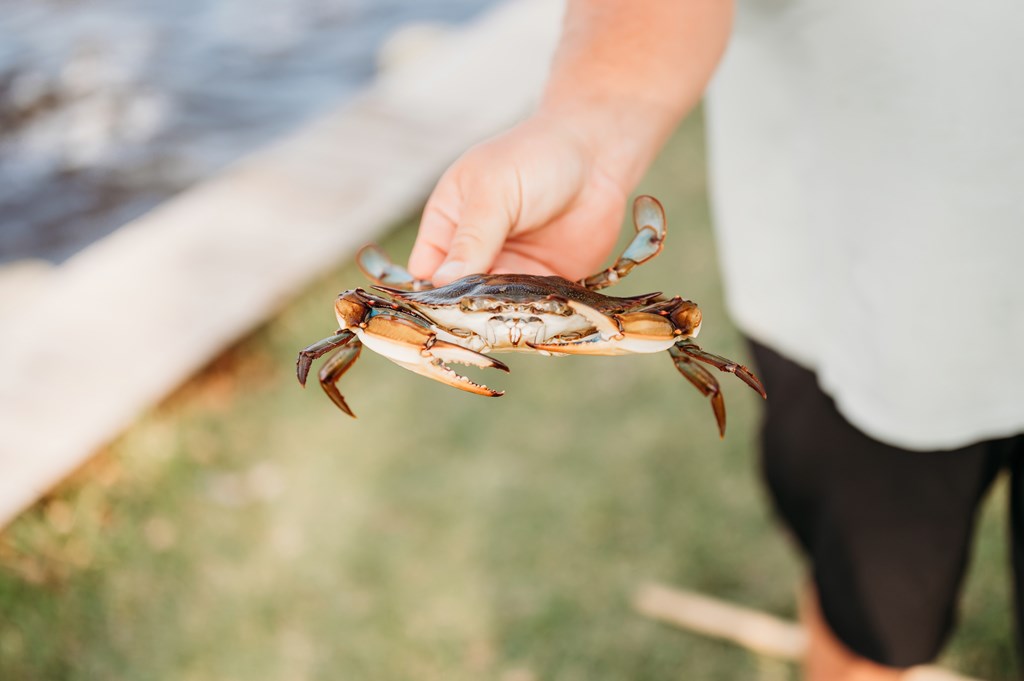
The pilings on our fishing and crabbing pier get slick with barnacles by July, a sign that blue crabs are working the pier for food underneath. Pocomoke Sound feeds directly into the Chesapeake Bay, and crabs move through the shallow water along our shoreline all summer. You don't need a boat or years of experience to catch one.
Learning how to catch crabs on the Chesapeake Bay starts with a piece of string, a chicken neck, and a little patience. Families do it here every week using gear from the camp store and a pier a short walk from most sites. This guide covers the equipment, the technique, and Virginia's current rules so your first trip actually puts crabs in the bucket.
Catch Crabs Without Leaving Tall Pines / Chesapeake Bay KOA
Most guides to catching blue crabs assume you own a boat, have a dock, or at least know somebody who does. At Tall Pines / Chesapeake Bay KOA, none of that applies. Our fishing and crabbing pier sits right on Pocomoke Sound, part of the Chesapeake Bay, and every guest can walk out and use it during their stay.
The pier puts you in real crab habitat instead of a stocked pond. Blue crabs feed along the pilings, grass beds, and shallow drop-offs within casting distance of the rail. Because the water is tidal, a quiet spot at mid-morning can turn busy with crabs by early evening. It's an underused amenity, and it works just as well for a quick try before dinner as it does for a full afternoon.
- No boat rental, launch fee, or open-water navigation required
- A short walk from most RV sites, cottages, and cabins
- A camp store on-site for bait, line, and a bucket if you forgot yours
You're not driving an hour to a public pier or renting gear from a bait shop in town. You're stepping off your site, walking a few minutes, and dropping a line, which matters more than it sounds like the first time a kid asks to go crabbing at 4pm on a Tuesday.
Hand Line or Trap? Choosing Your Crabbing Gear
Two basic methods work at the pier, and both catch crabs. A hand line and a trap differ mainly in how hands-on you want to be and how many crabs you're hoping to bring home.
A hand line is exactly what it sounds like, a length of string tied to bait, with a weight to keep it near the bottom. Drop it in, feel for a tug, and pull up slowly until the crab is close enough to net. It's the method most first-timers here use, since it's cheap, fast to rig, and lets kids feel every strike.
Traps and collapsible nets sit baited on the bottom and get checked every few minutes. They pull in more crabs with less attention, but Virginia requires a license once you're running more than two.
Chicken necks remain the classic bait. They're inexpensive, tough enough to survive several strikes, and sold at our camp store in season. Fish heads and bunker work too. Rig your line before you reach the pier, since fumbling with knots one-handed while a toddler asks for the bucket gets old fast.
Virginia's Crabbing Rules Every Beginner Should Know
Virginia's recreational crabbing rules change from year to year, and getting them wrong can turn a fun afternoon into a fine. As of this writing, the Virginia Marine Resources Commission (VMRC) does not require a license for hand line crabbing, or for fishing up to two crab traps, as long as you stay within the daily limit of one bushel of hard crabs and two dozen peeler crabs per person. Add a third trap and you need a recreational license for three to five pots.
Size matters too. Hard male crabs and immature female crabs must measure at least 5 inches point to point across the shell. Mature female crabs, easy to spot by their rounded, orange-tipped apron, have no minimum size under current VMRC rules. When in doubt, let it go.
Season windows shift by gear type. VMRC currently lists hand lines and collapsible traps as legal year-round, while use of up to two crab pots runs from March 17 through December 20, and licensed pots, three to five, are limited to June 1 through September 15.
Because these numbers get updated, confirm current season dates, size limits, and license requirements on the Virginia Marine Resources Commission's website before you go. What's posted here reflects regulations at the time of writing.
How to Catch Your First Blue Crab in 6 Steps
Timing matters as much as technique. Blue crabs feed most actively when the tide is moving, because moving water stirs up the small fish and debris they eat. Early morning and early evening tend to produce the best action, especially from June through August when midday heat pushes crabs into deeper, cooler water. Check a Pocomoke Sound tide chart before you head out.
1. Tie a chicken neck or fish head to one end of about 3 to 4 feet of string, and attach a small weight a foot above the bait.
2. Walk out on the pier and lower your baited line into the water near a piling or a patch of grass, letting it settle on the bottom.
3. Let out slack and wait at least 60 seconds. Crabs feed slowly, so rushing the check costs you catches.
4. Feel for a light tug on the line, then pull it up in one slow, steady motion. Jerking the line makes the crab let go.
5. When the crab is a foot or two below the surface, slide a dip net underneath it and scoop up and out in a single motion.
6. Measure the crab point to point across the shell. Keep it if it's a legal size and species, or release it right where you caught it if you're unsure.
The technique stays the same whether you land one crab or a dozen.
What to Do With Your Catch and How to Stay Safe
A bucket of crabs gives you two good options once you're done at the pier. Cook them that night, or send back anything you're not planning to eat. A few safety habits make the whole process easier for kids too.
Cooking Your Catch
Steaming is the simplest method for a first attempt. Bring an inch of water mixed with vinegar to a boil in a large pot fitted with a steamer basket, season generously with a seafood spice blend, layer in the live crabs, cover, and steam for 20 to 25 minutes until the shells turn bright orange-red. Pick the meat from the body and claws with a mallet and a butter knife once they've cooled. A dozen crabs makes a solid dinner for two adults and a couple of kids.
If a crab is undersized, a female carrying eggs, or a species you don't recognize, release it gently at the spot where you caught it. Hold it by the back two-thirds of the shell, away from the claws, and lower it back into the water instead of tossing it.
Safety Tips for Kids
- Teach kids to hold crabs from behind, pinching the back edge of the shell, never from the front.
- Keep young children an arm's length from an adult near the pier's edge, especially during a busy evening.
- Pack bug spray. Biting flies and mosquitoes get active around the pier at dusk, prime crabbing time.
- Use a bucket with a lid or a damp towel over the top, since crabs climb and will escape an open one.
- Apply sunscreen even on overcast days. Water reflects UV back up at anyone on the pier for an hour or more.
Frequently Asked Questions
Do I need a fishing license to crab from the pier at Tall Pines / Chesapeake Bay KOA?
No. Virginia does not require a license for hand line crabbing or for using up to two crab traps, within the daily limit of one bushel of hard crabs and two dozen peeler crabs per person. A license is required only for three to five crab pots. Confirm current rules with the Virginia Marine Resources Commission before your trip.
What's the best bait for catching blue crabs?
Chicken necks are the classic choice. They're inexpensive, tough enough to hold up to repeated bites, and sold at our camp store during the season. Fish heads and bunker work too. Tie the bait securely so it doesn't come loose the moment a crab tugs the line.
What size crabs can I legally keep in Virginia?
Male and immature female hard crabs must measure at least 5 inches point to point across the shell. Mature female crabs have no minimum size under current VMRC rules. Regulations and season dates change from year to year, so verify current limits before you go.
Tall Pines / Chesapeake Bay KOA sits on Pocomoke Sound on Virginia's Eastern Shore, with a private beach, a fishing and crabbing pier, and waterfront RV sites for families who want the Bay right outside their door.


