Smoky Mountains Wildlife: What to Watch For
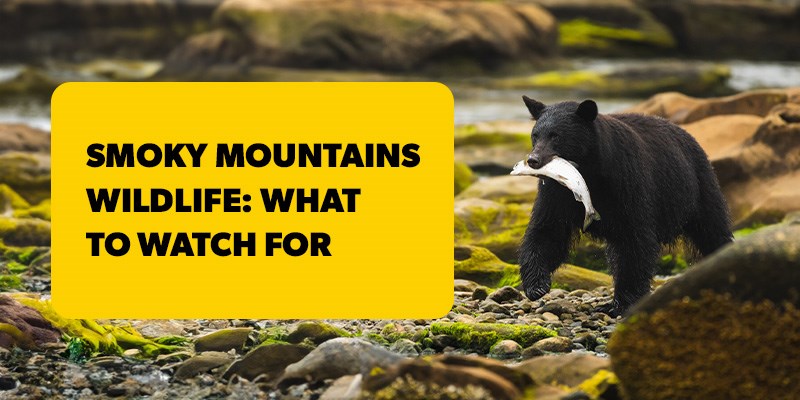
Smoky Mountains Wildlife: What to Watch For
The Smoky Mountains are a hot spot of biodiversity where visitors can see many mammal species throughout the year, depending on the season and location. The best places to see wildlife in the Smoky Mountains are numerous — if you know where to go, you can observe wildlife while respecting the animals and the park.
Most Common Smoky Mountains Wildlife Species
Here are some of the most common animals you can see in the Great Smoky Mountains.
Black Bears
Black bears are the iconic species of the Smokies, and a trip to the Smokies is not complete without a black bear sighting. Since an estimated 1,500 black bears call the park home, the chance of seeing one during your trip is very high. The best places to spot a black bear in the Smokies are:
- Cades Cove
- Cataloochee Valley
- Kuwohi (formerly known as Clingmans Dome)
When you see a bear, keep at least 150 feet away and remain watchful. Do not attempt to feed the bear.
White-Tailed Deer
White-tailed deer are graceful mammals that are very common in the park. You will likely spot them in open areas like Cataloochee or Cades Cove.
Elk
The Smoky Mountains are among the few elk-sighting opportunities in the American East. Elk were reintroduced into the park in 2001 and have thrived in the park's ecosystem ever since. The best place to see elk is in the Cataloochee Valley.
Safety Tips for Smoky Mountain Wildlife Encounters
Follow these tips to make sure your wildlife-spotting trip is successful and safe:
- Best times for viewing: You have the best chance of spotting wildlife at dawn and dusk when animals are most active.
- Animal behavior: Animal behavior changes with the seasons. For example, black bears are most active in July during mating season.
- Not feeding wildlife: When you see an animal, observe it, but do not try to feed it. Feeding wildlife is dangerous for animals and people.
Ethical Wildlife Watching Practices
During wildlife sightings, it is important to respect the natural habitat. These ethical practices preserve the park for future visitors:
- Stay on marked trails to avoid disturbing animals.
- Follow Leave No Trace principles to leave nature as unchanged as possible.
- Do not move vegetation or stack rocks, as these can disturb an animal's home.
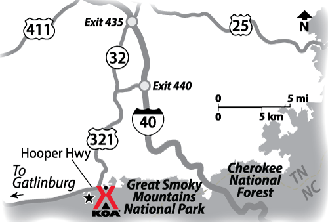
Stay at Gatlinburg East / Smoky Mountain KOA Holiday for the Ultimate Wildlife Experience
When planning your wildlife encounter trip to the Smokies, plan to stay at Gatlinburg East / Smoky Mountain KOA Holiday. Check out the RV Sites and reserve a site today!