Why We're Trading Old Concrete for Fresh Gravel Pads
If you've stayed with us in the last few months, you know our team takes pride in keeping the campground clean, comfortable, and ready for you to enjoy the great outdoors. Whether it's sprucing up the pool, adding new activities, or keeping our bathhouses in top shape, we're always looking for ways to make your experience better!
This season, we've been tackling a project that's been on our mind since we first laid eyes on the campground: replacing the aging concrete pads from the late 1970s with fresh, well-built gravel pads. It's a change you'll notice—and one we think you'll love once you pull in, set up, and kick back under the pines.
The Story Behind the Old Pads
Our existing concrete pads had served campers faithfully for more than four decades. But time—and Mother Nature—had not been gentle. These pads were poured when disco was king, gas was under 70 cents a gallon, and RVs were a whole lot lighter and smaller. They've endured years of sun, rain, freezing winters, and Mississippi humidity. Throw in the impact of tree roots in a wooded campground like ours and 25+ ton RVs (plus tow vehicles!), and you get a feel for what these slabs had to endure.
The result?
Cracks and crumbles. During prior stays, you may have seen breaks in the surface, missing chunks, and rough edges that make leveling a challenge.
Uneven surfaces. Shifting soil had left many pads pitched or tilted—hardly ideal when you're trying to get your RV just right.
Outdated size. Some pads were poured long before modern slide-outs and larger rigs became common, leaving them a bit undersized for today's camping setups.
In short, these pads had reached the end of their useful life. Patching would have only kicked the can down the road (and probably leave us with the same issues next year). It was time for a full upgrade.
Why Not Just Replace with New Concrete or Asphalt?
At first glance, it might seem like the easiest fix would be to rip out the old slabs and pour new ones—or switch to asphalt. But there's one big reason that's not the right choice for our location: our soil conditions.
Here in our corner of Mississippi, the ground beneath our feet is not the best friend of hard, solid surfaces. The sandy, organic soil in our piney woods shifts more than one might think. Add in seasonal moisture changes—soaking rains one week, dry spells the next—and you've got a recipe for movement under anything rigid.
With concrete or asphalt, that shifting leads to the same problems we have now: cracks, settling, and uneven surfaces. It's not a matter of if it would happen, but when. And given how quickly nature can work on this ground, "when" might be sooner than anyone would like.
That's where gravel comes in.
The Benefits of Gravel Pads
Gravel wasn't just an eco-friendly choice—it's the smarter option for our setting. Here's why we're excited about the switch:
Flexibility with the ground.
Gravel surfaces move with the soil instead of fighting it. When the earth shifts or settles, gravel can be raked, leveled, and topped off without tearing out the entire pad.
Improved drainage.
Rainwater runs right through a well-packed gravel pad instead of pooling or seeping under a solid slab, where it can cause damage. Better drainage means less mud, less mess, and fewer puddles where you don't want them.
Gentler on tires and jacks.
Gravel provides a slightly softer surface than concrete or asphalt, which is easier on your RV's tires and leveling jacks over time.
Better fit for the woods.
Let's face it—concrete feels like a parking lot. Gravel blends naturally into our forest surroundings, keeping the rustic charm of camping in the pines alive.
Easier to maintain.
If a section of gravel gets rutted or worn, we can quickly add fresh stone and regrade it the same day. No jackhammers or heavy demolition required.
Our Vision for the New Pads
This project wasn't just dropping some gravel on the ground and calling it a day...we only wish it was so easy!
Here's what the process looked like:
Removing the old concrete. We broke up the existing slabs and hauled away the debris, making room for a fresh start. To keep this project as environmentally conscious as possible, we reutilized the broken slabs for erosion control around the campground.
Grading the site. The ground was leveled and shaped for optimal drainage so water moves away from your site, not toward it.
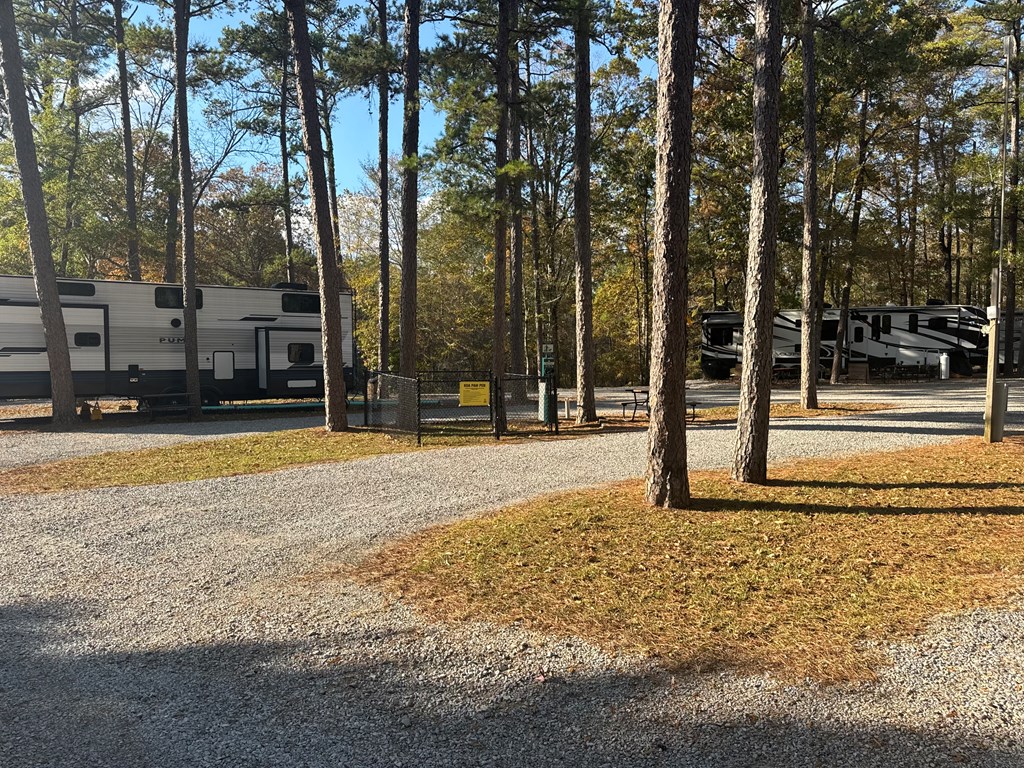
Adding quality gravel. We used a clean, compactable gravel blend that stays firm underfoot but still lets water pass through easily.
Finishing touches. We raked, leveled, and tamped the surface so it's ready for your arrival—no wobbling chairs or tilting grills here!
The Guest Experience Upgrade
For our guests, the change means:
Level setup every time. No more fiddling endlessly with blocks and ramps to get your rig right.
Cleaner sites. With better drainage, you'll spend less time dodging puddles and more time enjoying your site.
A natural feel. Gravel pads look right at home among the tall pines, making your camping experience feel closer to nature—without sacrificing comfort.
Room to breathe. As we rebuilt, we also took the opportunity to adjust pad lengths and widths to better fit modern RVs and tow vehicles.
Keeping the Spirit of the Woods
One of the reasons people love staying here is the setting—we're not a giant, paved parking lot with hook-ups. We're a campground in the woods, with the sound of wind in the trees, the scent of pine needles, and the sight of wildlife passing by.
Switching to gravel pads lets us keep that woodland character while still giving you a reliable, well-maintained spot to camp. Your view from the picnic table won't be of a cracked slab—it'll be of the forest floor, dotted with pine cones and dappled sunlight.
A Change for the Future
This project wasn't just about replacing something old. It was about building something that will last for years to come. Gravel pads give us the flexibility to maintain and improve sites without waiting decades for the "next big replacement." If a pad settles, we can fix it quickly and have it ready for the next guest in no time.
We know that change can sometimes feel unfamiliar, especially for guests who've been visiting for many years. But we're confident that once you set up on one of our new gravel pads, you'll see why this is a win for everyone—campers and campground alike.
Come See the Difference
The next time you pull in, know that we've been hard at work under the shade of the trees, making sure that your campsite is ready for everything from a quick overnight stop to a week-long getaway. Either way, you'll still enjoy all the things you love about our campground: tall pines, friendly faces, and the peaceful pace of life here in the woods.
Here at the Meridian East / Toomsuba KOA Journey, we believe that even the ground beneath your feet (and tires) should be as welcoming as the rest of your stay!