The Texas Saltwater Slam: Flounder, Redfish & Speckled Trout
Along the Texas Gulf Coast, there’s no fishing achievement more iconic or brag-worthy than landing the Texas Saltwater Slam. You may hear seasoned anglers talk about it with a mix of pride, luck, and a little superstition — and for good reason. The Slam is a true test of skill, timing, and understanding how Texas inshore species behave.
But what exactly is a Saltwater Slam? Why does it matter so much? And what makes these three fish — Flounder, Redfish, and Speckled Trout — the most legendary trio on the coast?
Let’s break it down.
What Is the Texas Saltwater Slam?
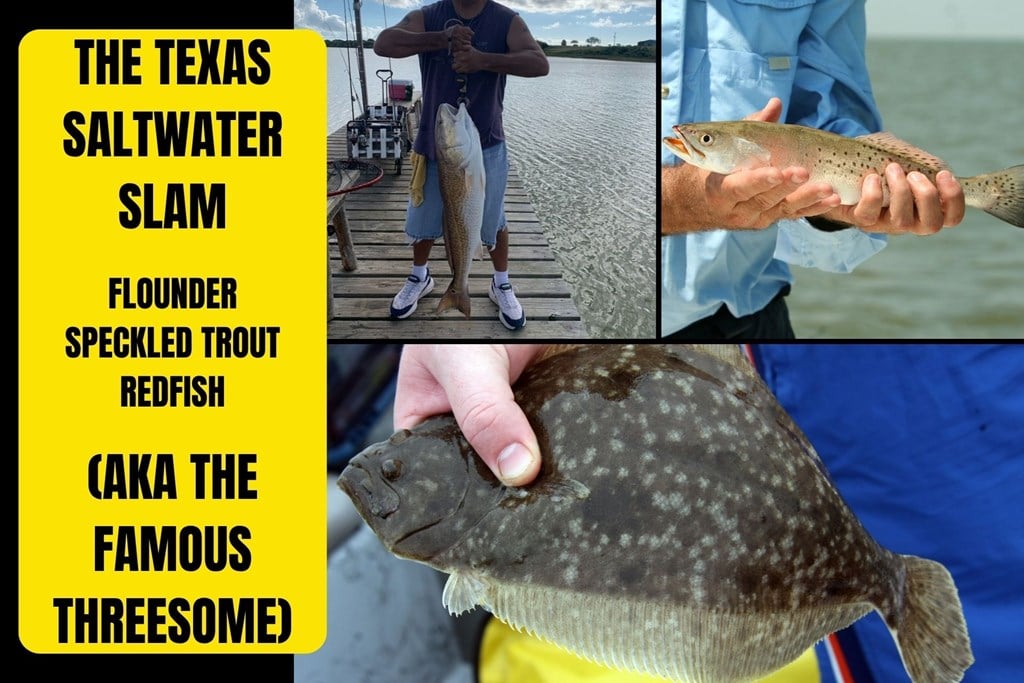
The Texas Saltwater Slam refers to catching all three signature inshore species in a single day:
- Flounder
- Redfish (Red Drum)
- Speckled Trout (Spotted Seatrout)
These species represent the backbone of inshore fishing along the Texas coast. Each one behaves differently, lives in slightly different environments, and requires anglers to adjust their techniques. Landing all three in one day means you’ve mastered a wide range of fishing skills — and got a little lucky, too.
Some anglers also chase versions like:
- Grand Slam – Redfish, Trout, Flounder, and Black Drum
- Inshore Slam – Often used interchangeably, but traditionally the same trio
- Super Slam – Redfish, Trout, Flounder, Black Drum, and Sheepshead
But the classic Saltwater Slam is the big three everyone talks about.
Meet the Famous Threesome
Below is a clear, accurate look at each fish and why they’re included in the Slam.
1. Flounder — The Ambush Expert
Scientific name: Paralichthys lethostigma (Southern Flounder)
Where they live: Near the bottom around sandy flats, marsh drains, and structure
Why they’re part of the Slam:
Flounder are sneaky. They lie flat on the bottom and wait for prey, blending in perfectly with their surroundings. Catching them in the same day as Reds and Trout means you adjusted to slow, bottom-oriented fishing.
Fun fact: Flounder undergo a dramatic metamorphosis — one eye actually moves to the other side of their head.
2. Redfish — The Texas Powerhouse
Scientific name: Sciaenops ocellatus (Red Drum)
Where they live: Shallow grass flats, bays, marshes, and around oyster reefs
Why they’re part of the Slam:
Redfish fight hard and feed aggressively, but they roam different water depths throughout the day. Anglers may find them tailing in shallow water early, then cruising deeper channels later on. Patience and searching pay off.
Fun fact: Their iconic black tail spot is believed to distract predators away from the head.
3. Speckled Trout — The Finesse Fish
Scientific name: Cynoscion nebulosus (Spotted Seatrout)
Where they live: Grass beds, reefs, channels, and slicks
Why they’re part of the Slam:
Trout can be picky eaters and often require lighter tackle or a more subtle approach. They bite differently than Reds or Flounder, which makes them a true test of finesse and timing.
Fun fact: When feeding aggressively, Trout will create an oily scent on the surface called a “trout slick.”
Why the Slam Matters
The Texas Saltwater Slam isn’t just about numbers — it’s about understanding the ecosystem.
To catch all three in one day, anglers must:
- Locate fish across different habitats
- Change techniques — topwater, soft plastics, live bait
- Adjust to tides, wind, and water clarity
- Be in the right place at the right time
Landing a Slam means you successfully navigated the entire inshore food chain that day. It’s a bucket-list moment.
Tips for Landing the Texas Slam
If you want to chase one during your stay, here are helpful, practical tips:
1. Start with Trout at sunrise
They’re most aggressive early and will hit topwater lures.
2. Move to Redfish mid-morning
Look for wakes, tailing fish, and shallow flats.
3. Target Flounder last
Work slow, bounce soft plastics near the bottom, or fish around drains on falling tide.
4. Keep an eye on tides
Outgoing tides concentrate all three species near cuts and marsh drains.
5. Don’t ignore structure
Oyster reefs, grass lines, and creek mouths can hold all three.
Why the Texas Coast Is Perfect for the Slam
From Matagorda Bay to Port Lavaca and down toward Rockport, Texas offers:
- Warm water most of the year
- Massive grass flats
- Marsh systems full of bait
- Healthy populations of all three Slam species
This combination makes our coast one of the best saltwater inshore fisheries in the United States.
Ready to Try for the Slam?
Whether you’re an experienced angler or a first-timer, the Texas Saltwater Slam is a thrilling challenge — and the Port Lavaca / Matagorda Bay coastline is one of the best places to chase it.
Bring your rod, pick the right tide, and maybe you’ll walk away with bragging rights to the famous Texas threesome:
Flounder. Redfish. Trout.