The Three Bay System of the Texas Gulf Coast
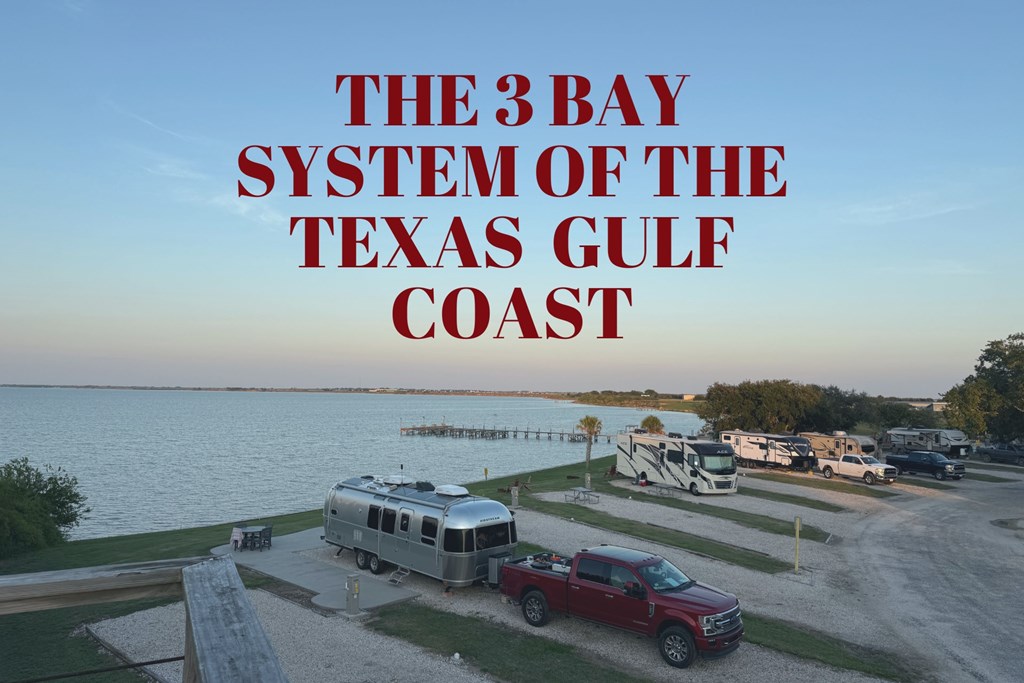
If you’re visiting the Port Lavaca / Matagorda Bay KOA, you’re perfectly positioned to explore one of Texas’ richest coastal regions. The Texas Gulf Coast includes several connected estuarine systems, but three of the most important — for ecology, recreation, and local culture — are Matagorda Bay, Galveston Bay, and Corpus Christi Bay. Each bay has its own character, habitats, and recreation opportunities. Here’s a concise guide to what makes each special and why they matter.
1. Matagorda Bay — quiet, productive, and wildlife-rich
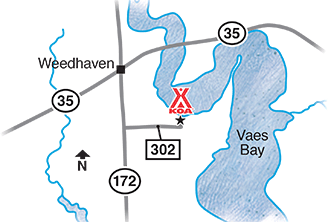
Matagorda Bay sits just southwest of the Houston-Galveston region and is fed by the lower Colorado River and smaller tidal creeks. Compared with its more urban neighbors, Matagorda Bay and its associated inlets and smaller bays (including Carancahua and Vaes Bay areas near Port Lavaca) retain a quieter, more pastoral coastal character. The bay system supports extensive marshes, tidal flats, and shallow-water habitats that are critical for juvenile fish, shellfish, and forage species. It’s a prime region for anglers targeting speckled trout, redfish, and flounder, and it’s popular with kayakers, birdwatchers, and families seeking lower-density beaches and fishing piers. Local parks and preserves provide public access and interpretive trails for wildlife viewing.
Practical note: Matagorda Bay’s shallower, marsh-dominated shorelines make it ideal for paddle sports (kayaks, SUP) and family-friendly fishing from piers and beaches — activities that align perfectly with a Port Lavaca KOA stay.
2. Galveston Bay — a large, diverse estuary with big-name influences
Galveston Bay is Texas’s largest estuary and one of the most economically and ecologically significant coastal systems in the state. It includes multiple sub-bays and extensive marshes, and it interfaces directly with the Houston–Galveston metropolitan complex. That proximity means Galveston Bay supports a mix of urbanized shoreline (ports, industry) and high-value natural habitats (marshes, oyster reefs, seagrass beds). The bay is a major nursery area for shrimp, finfish, and crabs and supports thriving recreational and commercial fisheries. It’s also a national-scale hotspot for birding and coastal recreation, but visitors should be aware of varying water-use pressures and the bay’s industrial waterfront in some areas.
Why it matters: Galveston Bay illustrates how coastal ecosystems and commerce coexist — and how conservation efforts (habitat restoration, water-quality monitoring) are essential to sustain both.
3. Corpus Christi Bay — semi-enclosed, warm, and recreationally rich
Corpus Christi Bay lies farther southwest along the Texas coast and is a semi-enclosed embayment that opens toward the Gulf through a series of channels and barrier islands. The bay and the nearby Laguna Madre complex support warm-water fisheries, extensive tidal flats, and unique shorebird migration corridors. Corpus Christi Bay has both recreational beaches and active commercial ports; its mix of shallow flats and deeper shipping channels creates varied opportunities for boating, fishing (including popular species like redfish and trout), and wildlife viewing. Research institutions in the region monitor fisheries, habitat health, and water quality to support both conservation and sustainable coastal use.
Practical note: Corpus Christi’s bay system is a short drive from many coastal communities and is widely known for both family-friendly beaches and strong fishing opportunities.
How the three bays relate (and why that matters)
Although geographically distinct, Matagorda, Galveston, and Corpus Christi bays form part of the Gulf Coast’s mosaic of estuaries. Estuaries are where fresh water mixes with seawater to create nutrient-rich, productive habitats. These bay systems support:
- Fisheries and shellfisheries (both recreational and commercial)
- Nursery habitats for juvenile fish and invertebrates
- Migratory and resident bird populations (important for birdwatching and ecotourism)
- Recreation and tourism economies (fishing, boating, beachgoing, wildlife tours)
They also face shared challenges: coastal development, water-quality stressors, storm impacts, and the need for habitat conservation and responsible public access. Ongoing monitoring and restoration projects — by universities, NGOs, and state agencies — help protect these systems for future visitors and local communities.
Port Lavaca is a great base for experiencing Matagorda Bay’s quieter shorelines, Carancahua Bay’s local access points, and day trips to other parts of the Texas bay system. If you’re into fishing, paddling, birdwatching, or slow coastal drives, Matagorda Bay and its nearby waters are ideal.
Top tips for guests
- Bring shallow-water gear: kayaks, small boats, wading shoes, or a reliable fishing rod.
- Check tides when planning shoreline fishing or launches (shallow flats can be exposed at low tide).
- Pack binoculars for birding at dawn or dusk — the migratory seasons are excellent.
- Support local conservation: follow posted rules for fishing limits and habitat protection.